Kimchi has traveled from Korean kitchens to tables all over the world. People now eat it for flavor, tradition, and the promise of better gut health. Fermented foods sit at the center of this trend, and kimchi leads the pack.
This guide explains what kimchi really is and how fermentation works. It also covers the honest science, the trade-offs, and easy ways to eat more fermented foods. You will leave with clear, practical knowledge instead of marketing hype.

What Is Kimchi?
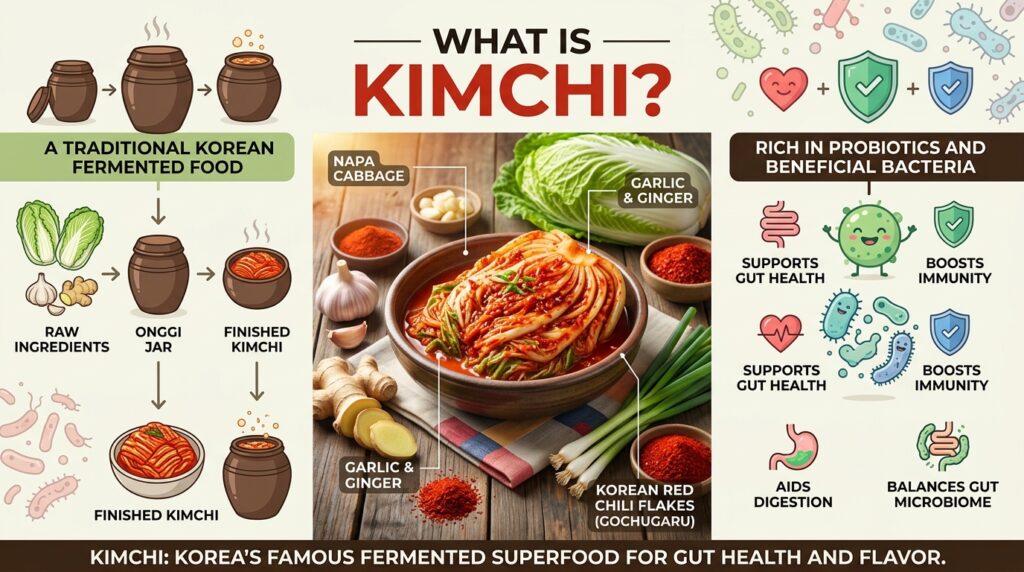
Kimchi is a traditional Korean dish made from salted and fermented vegetables. Napa cabbage and Korean radish form the most common base. Cooks then add garlic, ginger, chili powder, and salt.
Korea has hundreds of kimchi varieties, and each region brings its own twist. Some versions stay mild and crisp. Others carry strong heat, deep sourness, and a sharp aroma. Families often pass these recipes down through generations.
The dish gets its tangy taste from fermentation, not from vinegar. This same process fills kimchi with living bacteria. Those bacteria are the reason kimchi belongs to the wider family of fermented foods.
How Fermentation Works
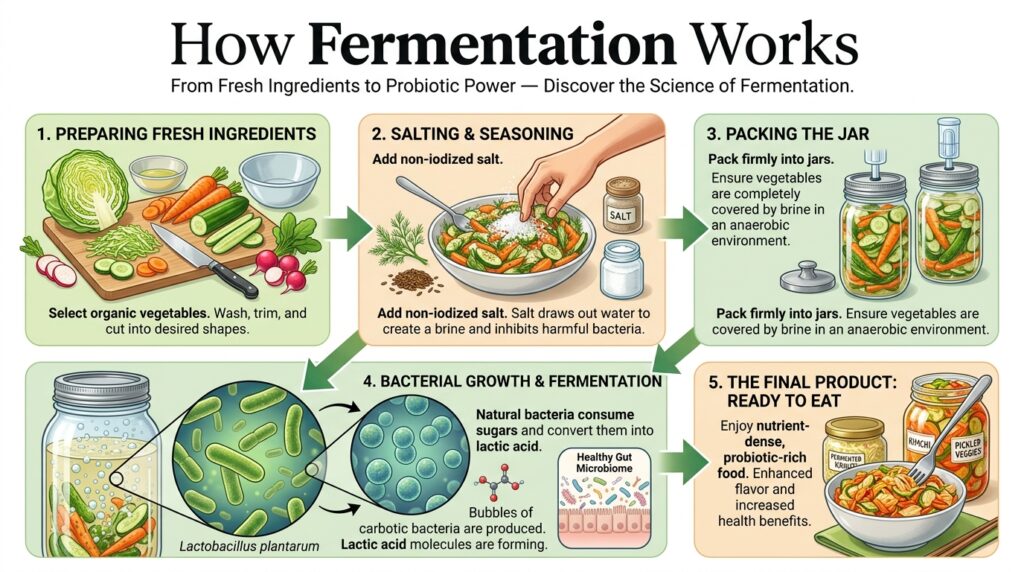
Fermentation is an old method of preserving food without a fridge. Salt pulls water out of the vegetables and slows harmful microbes. Helpful bacteria, mainly Lactobacillus, then take over the jar.
These bacteria feed on natural sugars in the vegetables. They produce lactic acid as they grow. That acid lowers the pH, guards the food, and creates the signature sour flavor.
This is why fermented foods can last for weeks or even months. The process is natural and biological, not chemical. Kimchi is one of the clearest everyday examples of lactic acid fermentation at work.
Why Fermented Foods Are So Popular Right Now
Interest in gut health has pushed fermented foods into the spotlight. Scientists keep studying the gut microbiome and how it shapes wellness. Kimchi and similar foods fit neatly into that conversation.
Social media has also helped. Bright jars, bold flavors, and quick recipes spread fast online. Many home cooks now ferment their own vegetables for fun and savings.
Still, popularity does not equal proof. A food can be trendy and useful at the same time. The key is to separate real benefits from exaggerated claims.

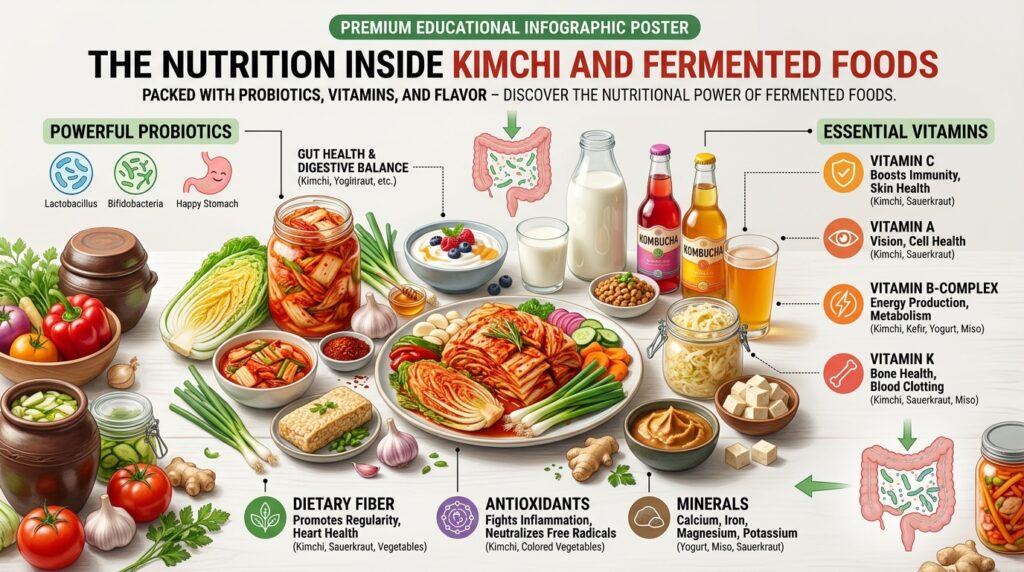
The Nutrition Inside Kimchi and Fermented Foods
Kimchi is low in calories and built on vegetables. A typical serving delivers fiber, vitamins, and minerals. You get vitamin C, vitamin K, and several B vitamins.
The cabbage and radish supply useful antioxidants. Garlic and chili add their own plant compounds. Together these turn kimchi into a nutrient-dense side dish.
Most fermented foods share one defining feature: live microbes. Many people call these probiotics. The bacteria in kimchi and fermented foods may support a balanced gut, though the strength of that effect varies by person and product.
Fiber matters here too. The vegetables in kimchi act as food for gut bacteria. This combination of fiber and live cultures is what makes fermented foods interesting to researchers.
Health Benefits: What the Science Actually Says
Fermented foods carry a strong health reputation. Part of that reputation is fair, and part is overstated. Honest information serves you better than bold promises.
Research links a regular intake of fermented foods to greater gut diversity. A varied microbiome supports digestion and the immune system. Kimchi may add to this diversity because of its live cultures and fiber.
Some small studies suggest fermented foods ease bloating and improve regularity. Others hint at modest benefits for blood sugar and cholesterol. These findings look promising, yet many studies are small, short, or done on animals.
So kimchi is not a miracle cure. It will not replace medicine or fix a poor diet on its own. The fairest view treats kimchi and fermented foods as one helpful piece of balanced eating.
The strongest reasonable claim is simple. A diet that includes fermented foods tends to support gut health. That is genuinely useful, but it is not magic, and you should be skeptical of anyone who promises more.

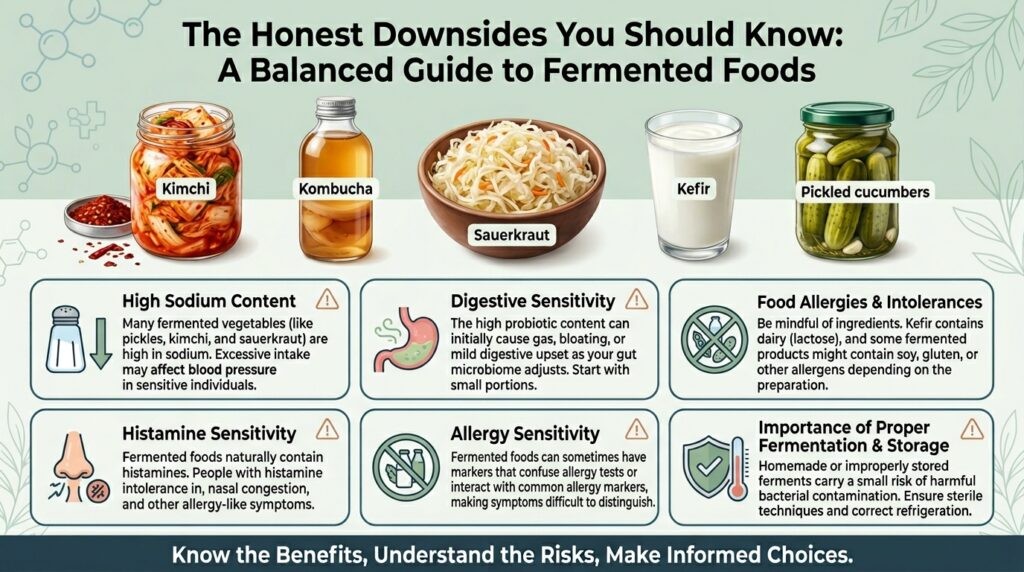
The Honest Downsides You Should Know
Kimchi offers real benefits, yet it also has trade offs. The biggest concern is sodium. Salt drives the fermentation, so kimchi is naturally high in it.
People who manage blood pressure should eat kimchi in moderation. A small daily portion is wiser than a large bowl. Pair it with fresh, low-salt foods to keep the balance right.
Spicy kimchi can also irritate sensitive stomachs. Start with small amounts if the dish is new to you. Many store bought versions add sugar or preservatives, so read the label carefully.
Heat is another hidden issue. Pasteurized or cooked fermented foods lose most live bacteria. The high temperature kills the probiotics that give raw kimchi its edge. For live cultures, choose refrigerated, unpasteurized products.
Popular Fermented Foods Around the World
Kimchi is famous, but it is far from alone. Many cultures rely on fermented foods for both flavor and preservation. Each one brings a different taste and texture.
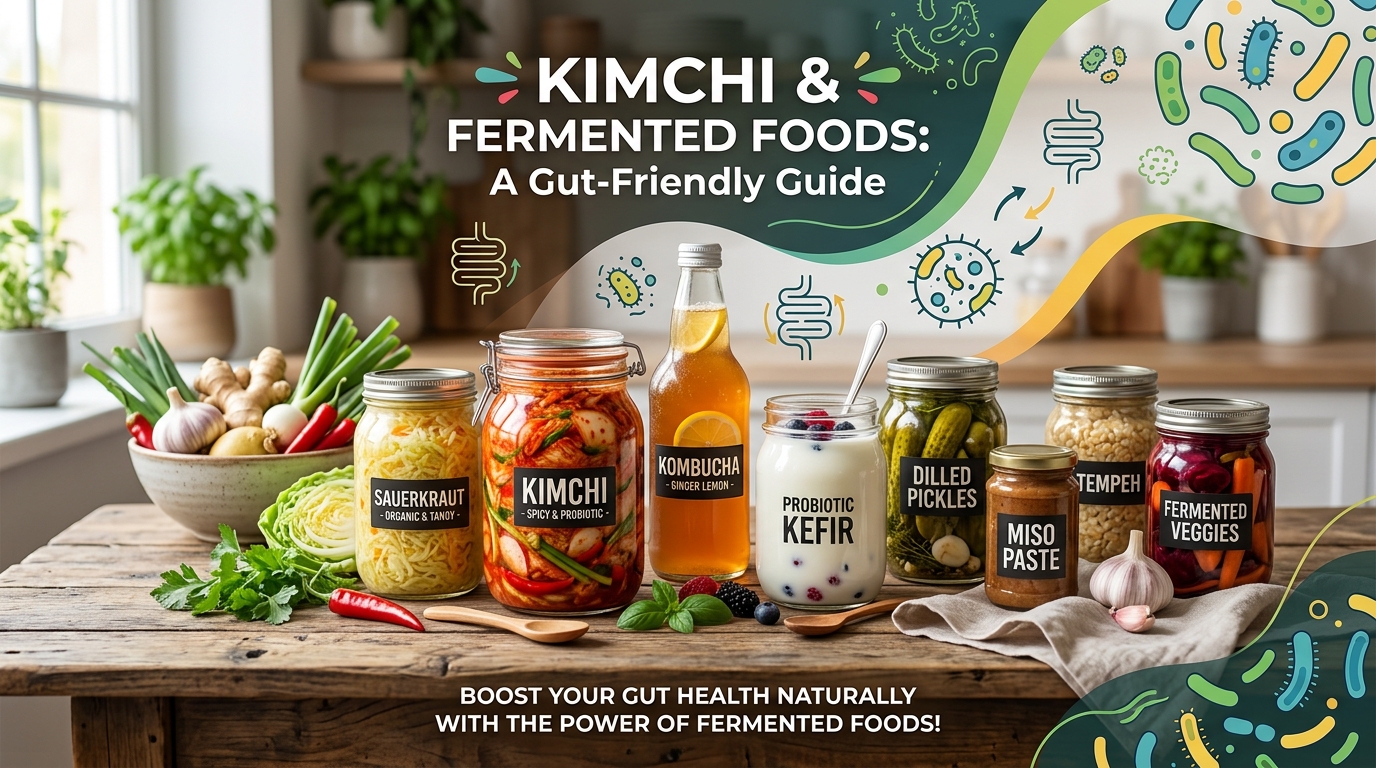
Sauerkraut is fermented cabbage from Central Europe, close in spirit to kimchi. Yogurt and kefir are fermented dairy foods rich in probiotics. Miso and tempeh come from fermented soybeans in East Asia.
Kombucha is a fermented tea with a fizzy, tangy bite. Sourdough bread relies on a slow fermented starter. Natto, a Japanese soybean dish, tastes strong and sticky but carries solid nutrition.
These examples prove that fermentation is a global tradition, not a single trend. Kimchi simply remains one of the most recognizable and beloved members of the group.

How to Add Kimchi and Fermented Foods to Your Meals
You do not need fancy recipes to enjoy kimchi. A single spoonful on the side adds flavor and crunch. Many people happily eat it straight from the jar.
Try kimchi with rice, fried eggs, or grilled meat. It also works well with noodles and stir-fries. The sour, spicy taste cuts through heavy, rich dishes.
Kimchi fried rice is a favorite quick dinner. You can fold kimchi into pancakes, stews, dumplings, or sandwiches. Cooked kimchi loses some probiotics but keeps its bold flavor.
The same logic applies to other fermented foods. Add yogurt to breakfast, miso to soup, and sauerkraut to wraps. Small, regular servings work far better than rare large ones.

Simple Homemade Kimchi Basics
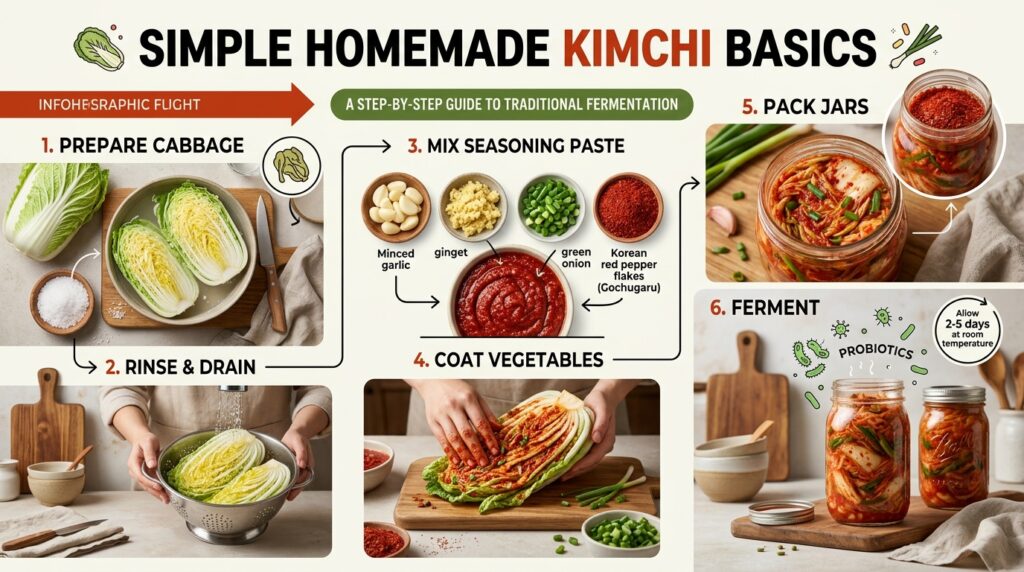
Making kimchi at home is easier than most people expect. You need cabbage, salt, garlic, ginger, and chili powder. Korean chili flakes give the classic red color and heat.
First, salt the chopped cabbage and let it rest for a few hours. The salt softens the leaves and draws out water. Rinse it well, then mix in your seasoning paste.
Pack the cabbage tightly into a clean glass jar. Leave a little space at the top for gases. Keep the jar at room temperature for one to three days.
Taste the kimchi daily as it ferments. Once the flavor turns pleasantly sour, move it to the fridge. Homemade kimchi lets you control the salt and spice yourself, which is a real advantage over many store brands.
Storage and Safety Tips
Proper storage keeps kimchi and other fermented foods safe to eat. Always use a clean utensil when you serve it. A dirty spoon can introduce harmful bacteria into the jar.
Keep the kimchi pressed under its liquid brine. This barrier protects it from mold and air exposure. Once it reaches the taste you like, store it cold in the fridge.
Good kimchi smells sour and sharp, never rotten. Throw out any batch with fuzzy mold or a foul, off odor. When you feel unsure, discard it and start a fresh jar.
Most fermented foods follow similar rules. Cool temperatures slow fermentation and extend shelf life. Trust your senses, and never eat something that looks or smells wrong.
How to Choose Good Kimchi at the Store
Not every jar on the shelf offers the same value. Smart shopping helps you get real probiotics and clean ingredients. A few label checks make a big difference.
First, look for the word unpasteurized or raw on the jar. These products keep their live cultures intact. You will usually find them in the refrigerated section, not on a dry shelf.
Next, scan the ingredient list for added sugar and artificial preservatives. Traditional kimchi needs only vegetables, salt, garlic, ginger, and chili. A short, simple list is a good sign.
Sodium still deserves attention. Compare brands and pick one with a lower salt content when possible. Cloudy brine and a slightly fizzy lid often signal active, healthy fermentation.
New eaters sometimes find kimchi intense at first. The sour, spicy, and pungent mix takes time to enjoy. A gradual approach makes the experience easier.
Begin with a small spoonful beside a familiar meal. Mild kimchi varieties suit beginners better than the fiery ones. Your taste buds adjust faster than you expect.
Cooking kimchi also softens its sharp edge. Heat tames the sourness while keeping the flavor. This trick helps families ease into fermented foods together.
Final Thoughts on Kimchi and Fermented Foods
Kimchi clearly earns its place as a tasty, nutrient rich food. It brings flavor, fiber, and live cultures to your plate. The wider world of fermented foods offers even more variety to explore.
Even so, honesty beats hype every time. Kimchi can support gut health, but it is not a cure for anything. Watch the sodium, pick quality products, and stick to reasonable portions.
Add kimchi and fermented foods to a balanced diet, and you gain a flavorful, gut-friendly habit. Start small, stay consistent, and let your own taste guide the way.