A complete, expert-backed guide to stocking the right emergency food with shelf life data, nutrition facts, and storage strategies that could save your life.
12 min readUpdated May 2025Verified by Nutritionists
Emergencies don’t wait for your grocery run. Whether it’s a flood, earthquake, power outage, or war crisis having the right emergency food supply is the single most important step you can take for your family’s survival. This guide covers everything: what to buy, why it works, how long it lasts, and how to store it correctly.
72hrs Minimum supply recommended by experts
2,000 Daily calories needed per adult
30 years Max shelf life of freeze-dried food
Why Emergency Food Planning Matters
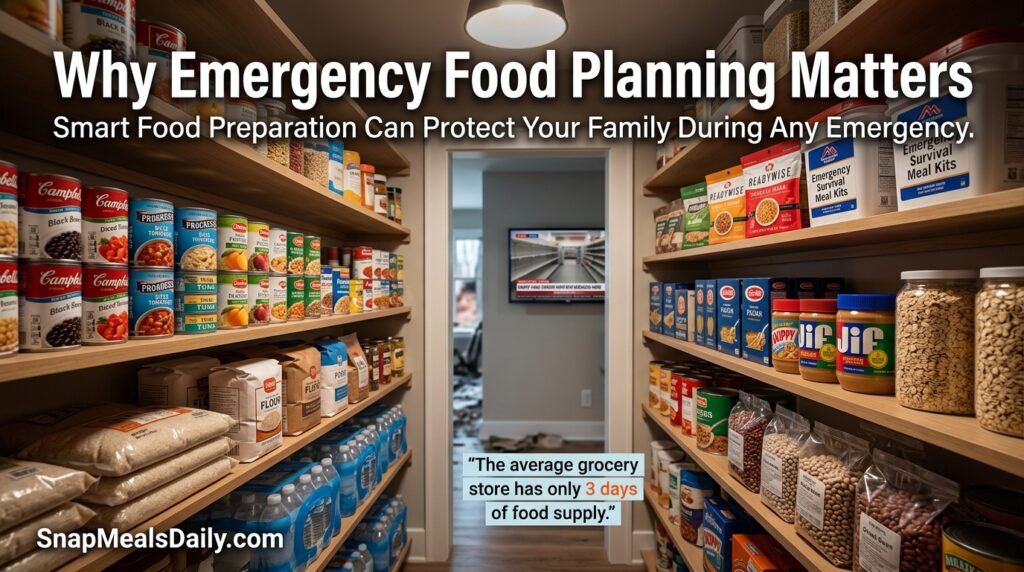
Most people believe disasters are rare events that happen to “other people.” This is one of the most dangerous misconceptions in modern society. According to the Federal Emergency Management Agency (FEMA), over 60% of American households do not have even a 3-day emergency food supply and that number is similar across the developed world.
In 2023, natural disasters impacted over 300 million people globally. Floods, wildfires, earthquakes, and even large-scale power grid failures can instantly cut off your access to grocery stores, fresh water, and restaurants for days — sometimes weeks.
“The average grocery store has only 3 days of food supply on its shelves. Within hours of a major emergency, those shelves are empty.” FEMA Emergency Preparedness Report, 2023
Emergency preparedness is not paranoia it is responsible planning. And it starts with choosing the right foods that are calorie-dense, nutritious, shelf-stable, and easy to prepare under pressure.
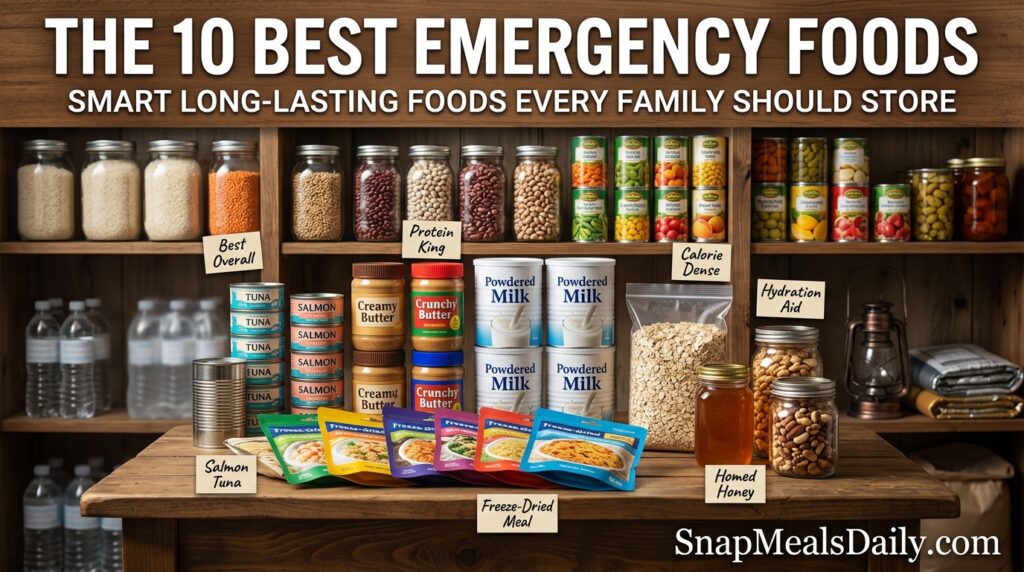
The 10 Best Emergency Foods
The following foods are ranked based on four critical factors: shelf life, caloric density, nutritional value, and ease of preparation. These are not just survival foods many of them are everyday staples that belong in every pantry.
1.Best Overall
White Rice
Shelf life: 25–30 years
Polished white rice stored in airtight containers lasts up to 30 years. It’s calorie-dense (360 calories/100g), filling, and incredibly easy to cook. The cornerstone of every emergency pantry worldwide.
2.Protein King
Canned Beans & Lentils
Shelf life: 5–10 years
Beans are a nutritional powerhouse — packed with protein, fiber, iron, and complex carbs. They require no refrigeration and can be eaten straight from the can in emergencies. Chickpeas, kidney beans, and black beans are top picks.
3.Calorie Dense
Peanut Butter
Shelf life: 1–2 years
With 588 calories per 100g and high protein content, peanut butter delivers emergency energy fast. No cooking required. Unopened jars last nearly 2 years. One of the most beloved survival foods across the globe.
4.Versatile
Canned Tuna & Salmon
Shelf life: 3–5 years
High in protein, omega-3 fatty acids, and vitamins. Canned fish requires zero preparation and provides complete protein — rare in non-perishable foods. Essential for physical and mental energy during crises.
5.Long Shelf
Freeze-Dried Foods
Shelf life: 25–30 years
Freeze-drying removes 98% of moisture while preserving nutrition, flavor, and texture. Just add water and eat. Brands like Mountain House and Augason Farms offer complete freeze-dried meals — fruits, vegetables, proteins.
6.Energy Fast
Honey & Sugar
Shelf life: Indefinite
Pure honey literally never expires — archaeologists found 3,000-year-old honey in Egyptian tombs that was still edible. It provides rapid energy, has antibacterial properties, and can serve as a natural medicine in emergencies.
7.Complete Carb
Oats & Rolled Oats
Shelf life: 2–5 years
Rolled oats provide sustained energy, fiber, and essential minerals. They can be eaten raw with water in extreme emergencies or cooked into a warm, satisfying meal. Cheap, lightweight, and universally available.
8.Hydration Aid
Canned Vegetables & Fruits
Shelf life: 2–5 years
Canned goods retain up to 90% of their nutritional value. Tomatoes, corn, peaches, and green beans provide vitamins, hydration, and variety that prevent “appetite fatigue” during long-term emergencies.
9.High Fat
Nuts & Seeds
Shelf life: 1–2 years
Almonds, walnuts, sunflower seeds, and cashews are among the most calorie-dense natural foods. High in healthy fats, magnesium, and vitamin E. Vacuum-sealed nuts stay fresh for up to 2 years without refrigeration.
10.Hydration
Powdered Milk
Shelf life: 2–10 years
A critical source of calcium, protein, and vitamin D — especially important for children and the elderly during emergencies. Mix with water for drinking or cooking. Sealed cans last up to 10 years.
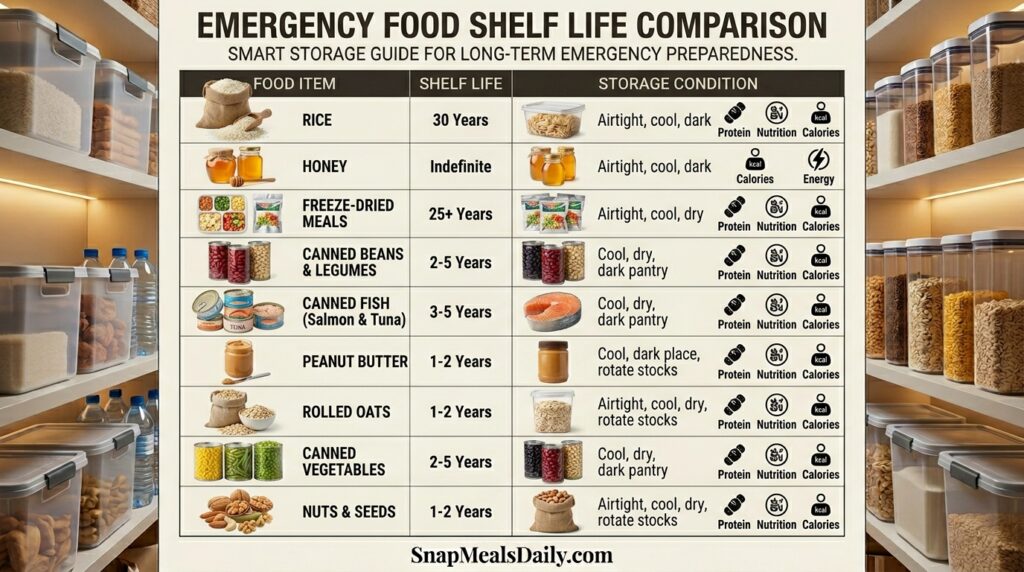
Emergency Food Shelf Life Comparison
Understanding shelf life is essential for rotating your supply and avoiding waste. Below is a comprehensive reference table:
| Food Item | Shelf Life | Storage Condition | Best For |
|---|---|---|---|
| White Rice | 25–30 years | Sealed container, cool/dry | Calories, bulk meals |
| Honey | Indefinite | Sealed jar, room temp | Energy, medicine |
| Freeze-Dried Meals | 25–30 years | Sealed pouch, away from heat | Complete nutrition |
| Canned Beans | 5–10 years | Cool, dry pantry | Protein, fiber |
| Powdered Milk | 2–10 years | Sealed tin, below 50°F | Calcium, kids |
| Canned Tuna/Salmon | 3–5 years | Cool, undamaged cans | Complete protein |
| Peanut Butter | 1–2 years | Cool, dry | Fast calories, fat |
| Oats | 2–5 years | Sealed container | Sustained energy |
| Nuts & Seeds | 1–2 years | Vacuum-sealed, dark | Healthy fats |
| Canned Vegetables | 2–5 years | Cool pantry, no damage | Vitamins, hydration |
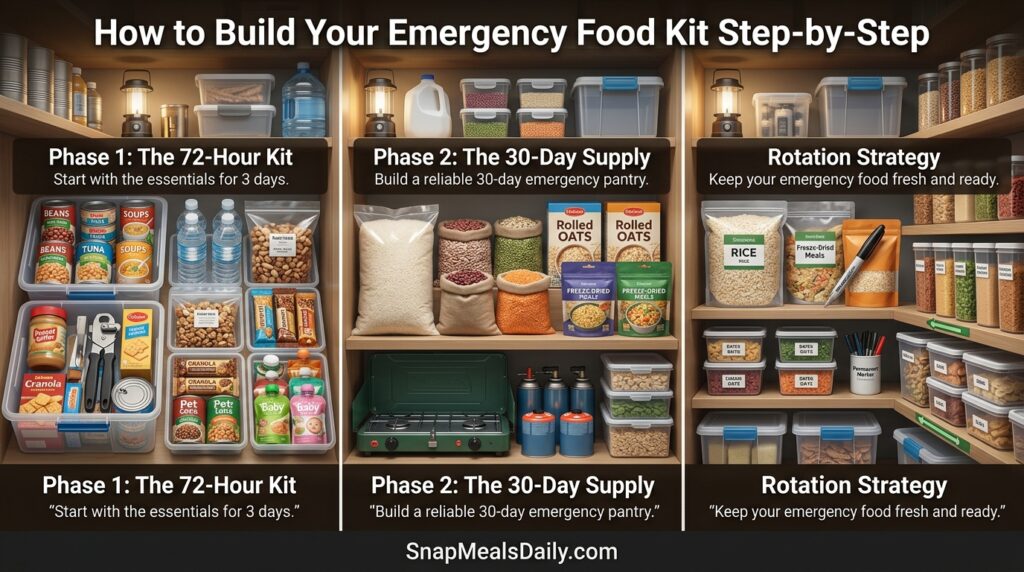
How to Build Your Emergency Food Kit Step-by-Step
Building an emergency food supply does not require spending thousands of dollars at once. Follow this phased approach:
Phase 1: The 72-Hour Kit (Start Here)
Your first goal is a 3-day food supply per person in your household. This is the baseline recommended by FEMA, the Red Cross, and international disaster agencies. Calculate: 2,000 calories × 3 days × number of people.
- Ready-to-eat canned goods no cooking required: canned beans, tuna, vegetables, soups
- High-calorie snacks peanut butter, nuts, granola bars, crackers
- 1 gallon of water per person per day critical and often overlooked
- Manual can opener absolutely essential; electric openers are useless in power outages
- Baby/pet food if needed plan for all members of your household
Phase 2: The 30-Day Supply
Once your 72-hour kit is complete, expand to a full month. This is where bulk staples like white rice, dried beans, oats, and freeze-dried meals become your priority. A 30-day supply for one adult costs approximately $150–$250 when purchased strategically.
- 25 lbs white rice — stored in sealed mylar bags with oxygen absorbers
- 10 lbs dried lentils/beans — protein backbone of your kit
- 5 lbs rolled oats — breakfast for weeks
- Multiple freeze-dried meal kits — variety prevents appetite fatigue
- Cooking fuel supply — propane camp stove or alcohol stove with extra fuel
Important: Rotation Strategy
Emergency food is only effective if it hasn’t expired. Use the FIFO method (First In, First Out) — always eat the oldest items first and replace them. Label every item with the purchase date using a permanent marker. Review your supply every 6 months.
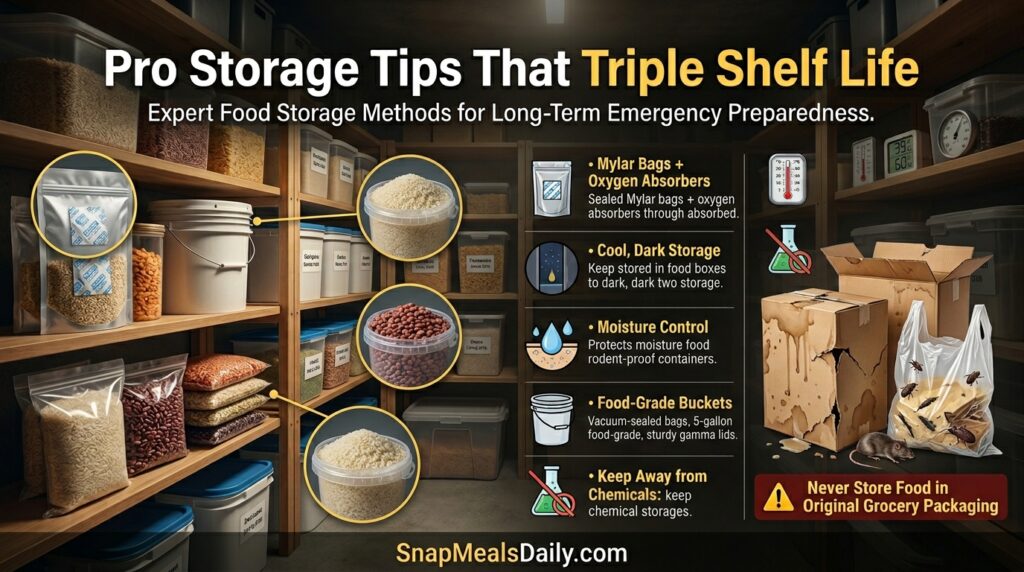
Pro Storage Tips That Triple Shelf Life
Even the best emergency food will spoil prematurely without proper storage. Here are evidence-based storage techniques used by preppers, military units, and humanitarian organizations:
- Mylar bags + oxygen absorbers — the gold standard for dry goods. Removes 99% of oxygen, preventing oxidation and insect infestation. Rice stored this way lasts 25+ years.
- Cool, dark location — every 10°F rise in temperature halves shelf life. Store below 70°F whenever possible. A basement is ideal.
- Moisture control — humidity is the enemy. Use food-grade desiccant packets alongside your dry goods and keep them away from concrete floors.
- 5-gallon food-grade buckets — UV-resistant, stackable, and rodent-proof. Seal with a rubber mallet and gamma lids for regular access.
- Away from chemicals and gasoline — food absorbs odors through packaging. Never store near cleaning supplies, paint, or fuel.
Never store food in original grocery packaging during long-term storage. Cardboard, thin plastic, and paper allow moisture and pests to enter within months. Transfer all dry goods to proper sealed containers immediately.
Emergency Food for Special Dietary Needs
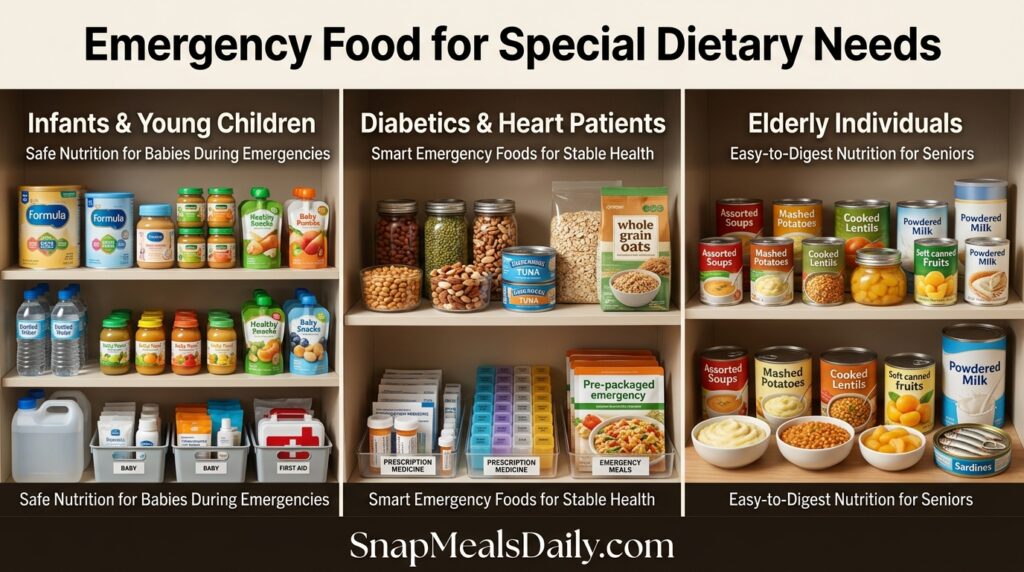
One size does not fit all in emergency preparedness. Every household has unique nutritional requirements that must be planned for in advance — not during a crisis.
Infants and Young Children
Store a minimum 2-week supply of formula (if not breastfeeding), baby food purees, and age-appropriate snacks. Note that breastfeeding is the most resilient feeding option during emergencies, as it requires no preparation or supplies.
Diabetics and Heart Patients
Focus on low-glycemic options: legumes, nuts, canned fish, and whole grain oats. Avoid high-sugar emergency foods like energy bars loaded with refined sugars. Coordinate with your physician to ensure a 90-day prescription medicine supply alongside food storage.
Elderly Individuals
Prioritize soft-textured, easy-to-digest options. Canned soups, powdered mashed potatoes, cooked lentils, and soft canned fruits are ideal. Ensure adequate calcium sources for bone health powdered milk and canned sardines with bones are excellent options.
Start Your Emergency Pantry Today
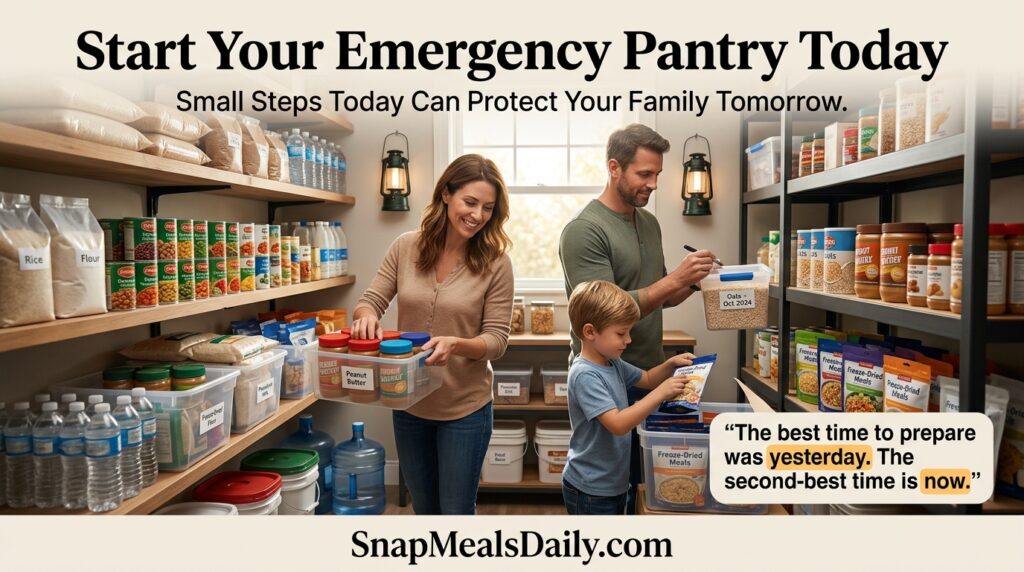
The best time to build an emergency food supply was yesterday. The second-best time is right now. You don’t need to do it all at once — start with one week’s worth for your family and build from there. Your future self will thank you.
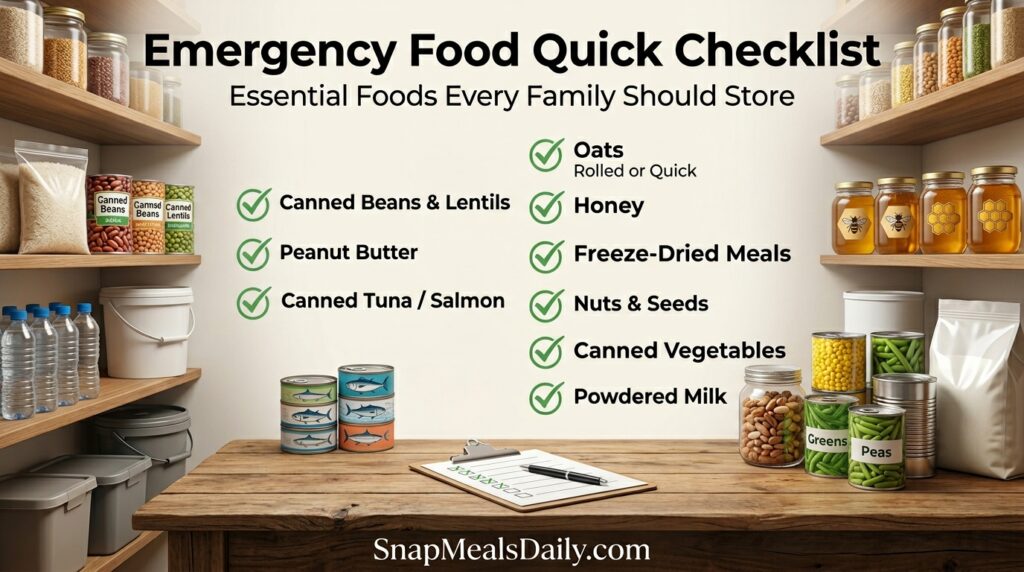
Quick Checklist
- White rice (sealed)
- Canned beans & lentils
- Peanut butter
- Canned tuna / salmon
- Oats (rolled or quick)
- Honey (sealed jar)
- Freeze-dried meals
- Nuts & seeds
- Canned vegetables
- Powdered milk