A new year is the perfect time to make healthy eating easier, not harder. Busy mornings, long workdays, and unexpected plans can quickly ruin even the best food goals. A simple meal prep routine gives you ready to eat options before hunger and busy schedules take over.
This healthy meal prep for New Year guide shares 15 practical ideas for breakfasts, lunches, dinners, and snacks. You will find simple meals that use familiar ingredients and require manageable preparation. You can also mix different ingredients throughout the week instead of eating the same meal every day.
Healthy meal prep does not mean cooking every meal in advance. It means preparing a few useful ingredients that can become several different meals. This approach can save time, reduce food waste, and make balanced choices much easier during busy weekdays.
Federal nutrition guidance recommends building meals around vegetables, fruits, grains, protein foods, and dairy or fortified alternatives. It also encourages limiting added sugars, saturated fat, and excess sodium. These simple principles can help you create meals that support a balanced eating routine.
The best part is that you do not need an elaborate kitchen or complicated recipes. A few containers, fresh ingredients, and a simple weekly plan can make a noticeable difference. Start with a small amount of preparation, then build your routine as you become more comfortable.
Why Meal Prep Works for a New Year Reset
January often brings ambitious food goals that can become difficult to maintain. Preparing a few meals ahead gives you an easier option when your schedule becomes unexpectedly busy.
Instead of ordering takeout or skipping a meal, you can reach for something already prepared. You also have more control over the ingredients, portions, and flavors in your meals.
Planning your grocery trip before shopping can make the process even easier. Check your refrigerator, freezer, and pantry first. Then create a short shopping list based on the meals you actually plan to prepare.
The goal should not be perfect meal preparation every week. Your goal should be creating a simple system that makes healthy eating more convenient.
Why Meal Prep Works for a New Year Reset
January often brings ambitious food goals. Many people promise themselves they will cook every meal from scratch. That plan sounds great until work, errands, family plans, and unexpected tasks appear.
Meal prep creates a backup plan for those busy moments. You already have cooked grains, vegetables, proteins, and snacks ready. You only need to assemble them into a meal.
Planning also helps you shop with more purpose. MyPlate recommends checking your pantry, refrigerator, and freezer before shopping. Creating a weekly plan can reduce unnecessary purchases and food waste.
The goal should not be perfection. Your goal should be making healthy food easier to reach.
How to Build a Healthy Meal Prep Routine
Start with four basic components: protein, vegetables, whole grains, and healthy extras. You can then combine those ingredients in several ways.
For protein, consider chicken breast, eggs, beans, lentils, tuna, tofu, or Greek yogurt. Choose vegetables that can handle reheating without becoming too soft.
Brown rice, quinoa, oats, whole-grain pasta, and potatoes can provide filling carbohydrate options. Fresh fruit, nuts, seeds, and simple sauces can add variety.
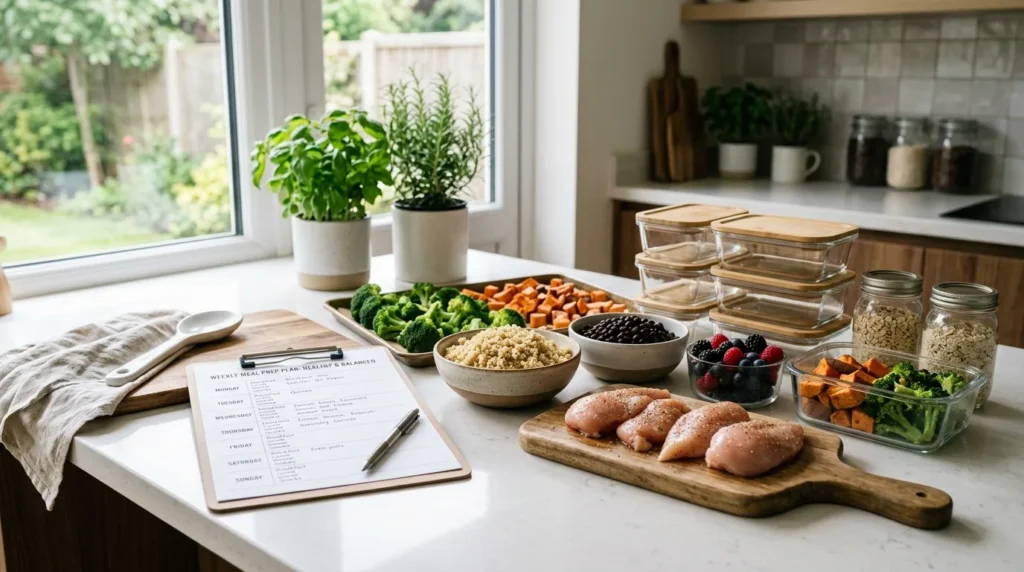
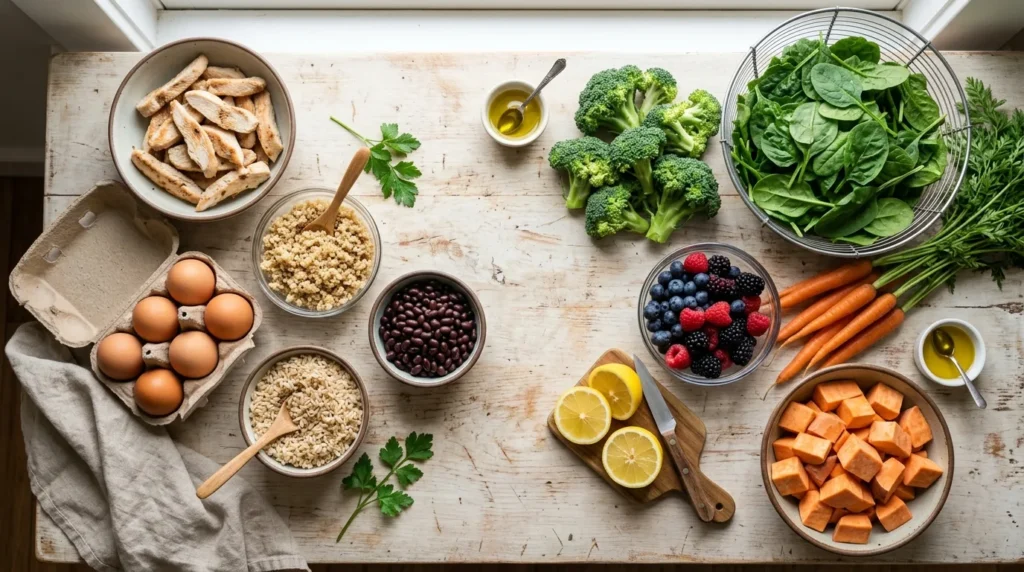
Try preparing two proteins, two vegetables, one grain, and two quick snacks. This amount gives you plenty of combinations without creating a huge cooking project.
guidance also suggests preparing vegetables, grains, and protein foods ahead. Labeling containers with their contents and dates can make the process easier.
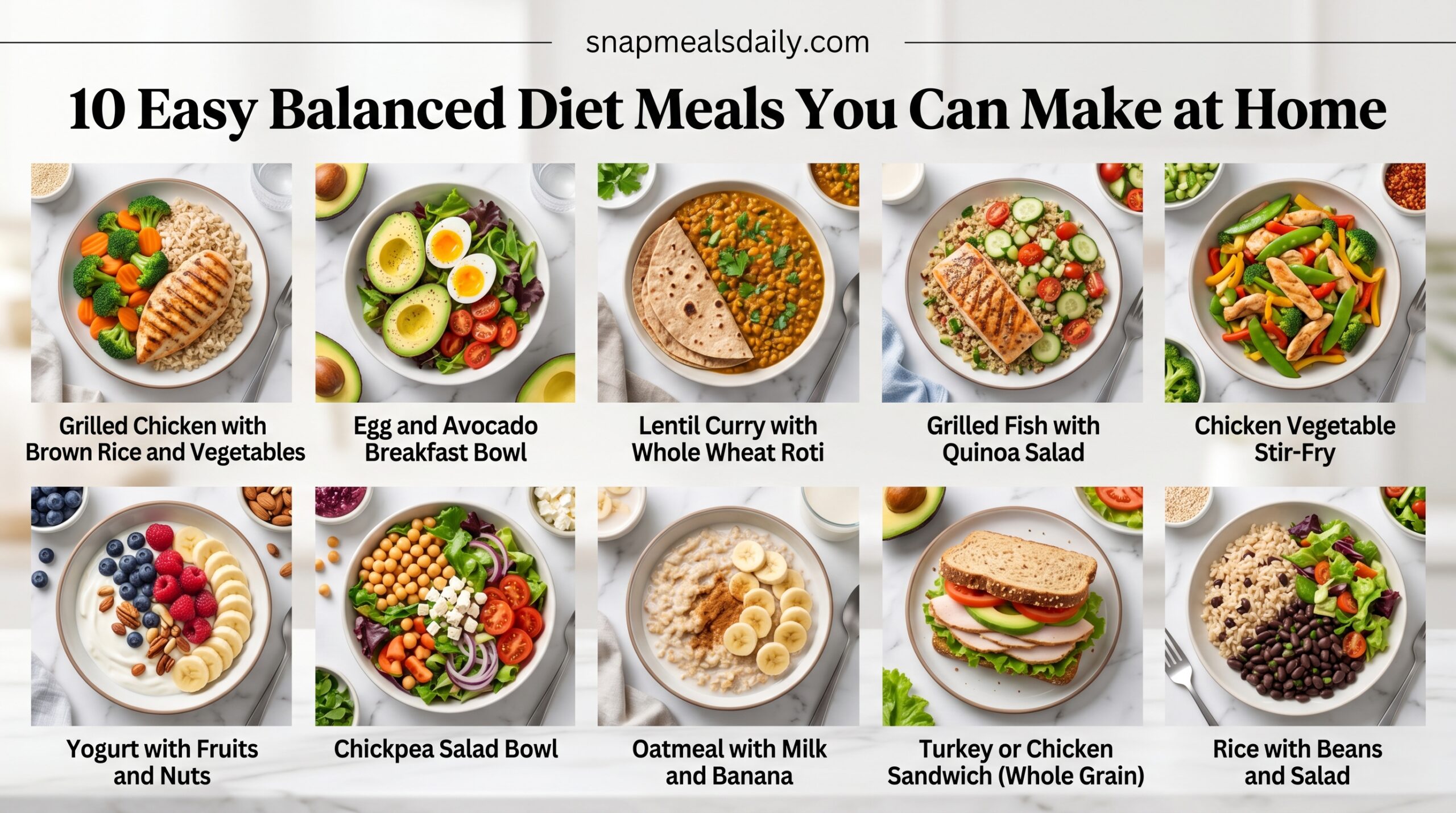
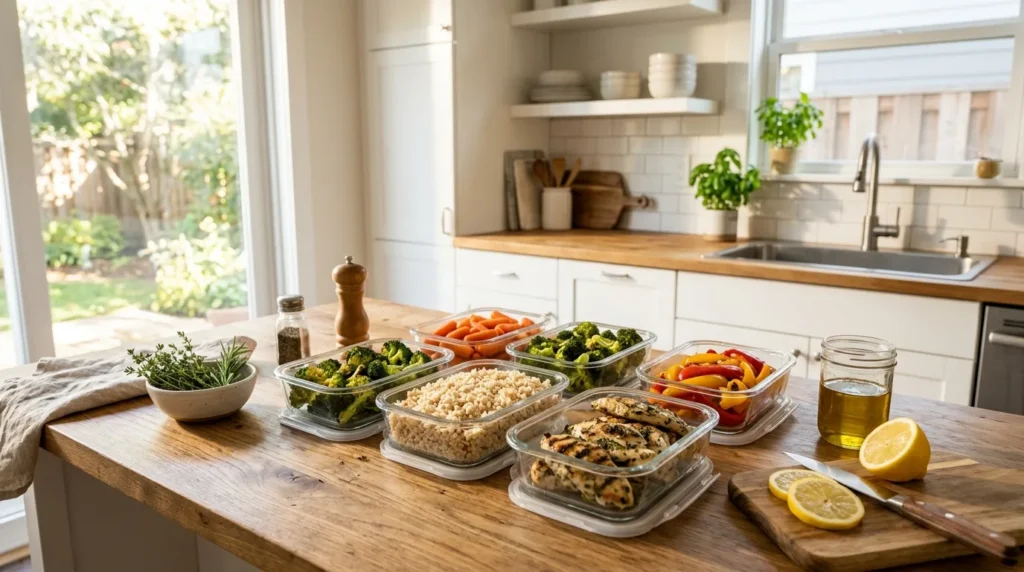
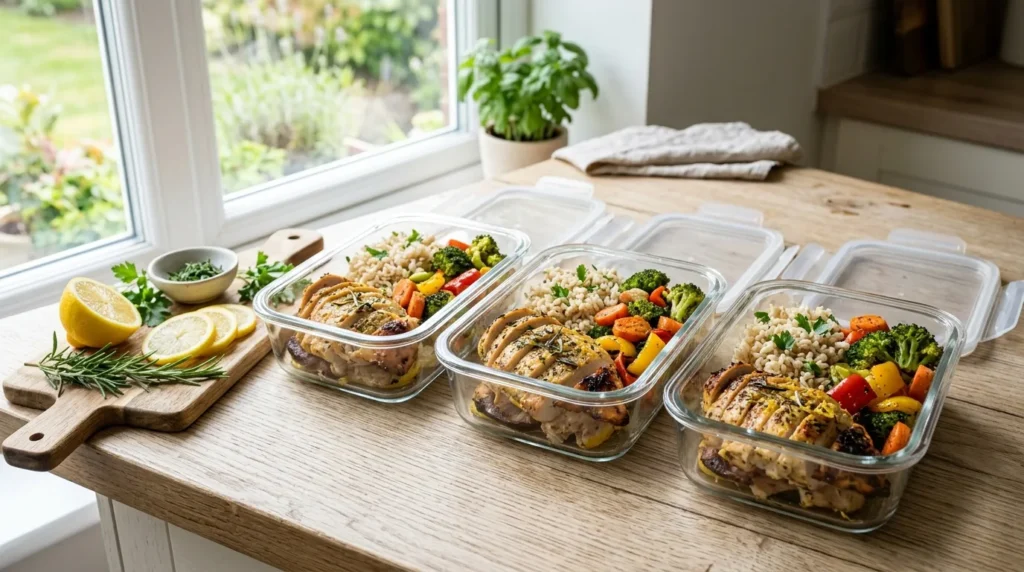
1. Lemon Herb Chicken Meal Prep Bowls
Lemon herb chicken bowls make an excellent starting point for your weekly prep.
Season chicken breasts with lemon juice, garlic, black pepper, paprika, and dried herbs. Roast or grill the chicken until fully cooked.
Prepare brown rice or quinoa while the chicken cooks. Then roast broccoli, carrots, and bell peppers on another tray.
Divide the ingredients between meal containers. Add a small portion of plain Greek yogurt sauce or hummus when serving.
You can change the flavor later with salsa, hot sauce, or a simple lemon dressing. This keeps the same ingredients from tasting boring.
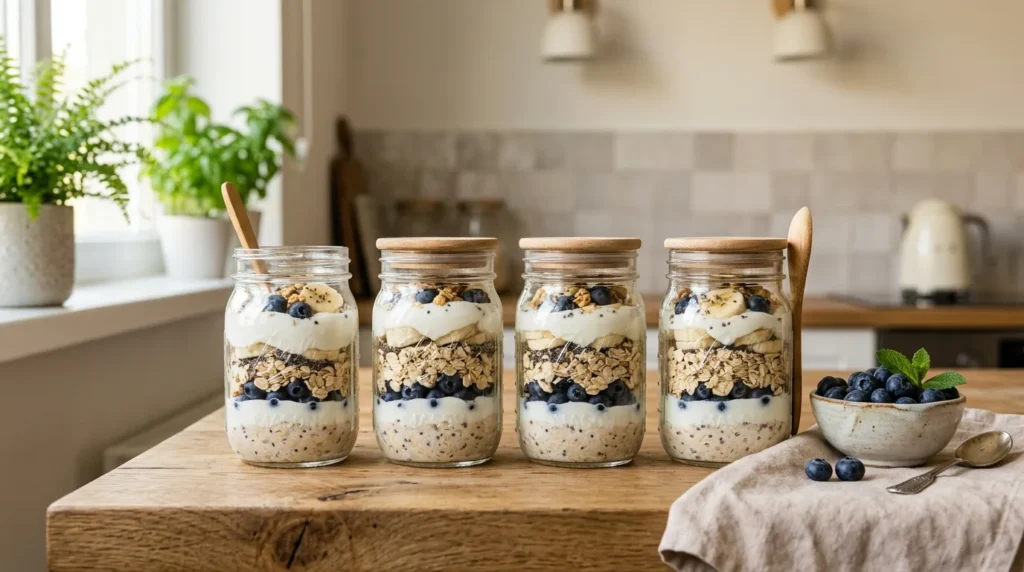
2. Overnight Oats for Easy Breakfasts
Breakfast becomes much easier when you prepare it the night before.
Combine rolled oats, plain Greek yogurt, milk, chia seeds, and fruit in small jars. Stir everything well and refrigerate overnight.
You can prepare several jars at once. Try berries in one batch and bananas with cinnamon in another.
For sweetness, use fruit instead of relying heavily on added sugar. MyPlate also suggests using fruit in yogurt, oatmeal, and smoothies for natural sweetness.
Keep toppings separate if you prefer crunchy textures. Add nuts or seeds right before eating.
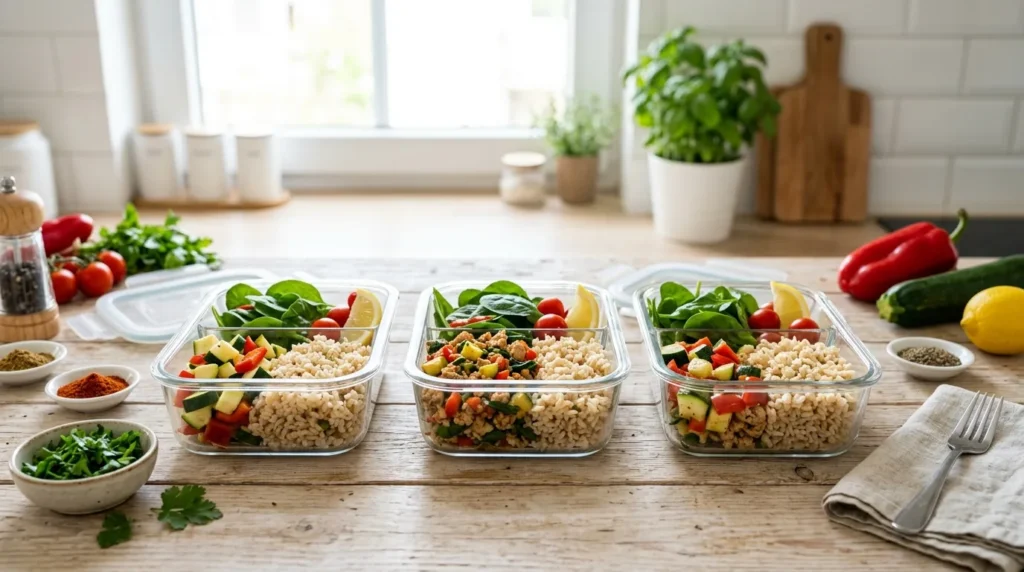
3. Turkey and Vegetable Lunch Boxes
Lean turkey can become a useful base for several lunches.
Cook ground turkey with garlic, onion, paprika, cumin, and black pepper. Add chopped zucchini, bell peppers, or spinach.
Serve the mixture with brown rice, roasted potatoes, or whole-grain tortillas. You can also add beans for extra texture.
Prepare the turkey mixture without heavy sauces. Then change the final flavor with salsa, avocado, yogurt sauce, or fresh herbs.
This gives you several lunch options from one basic preparation.
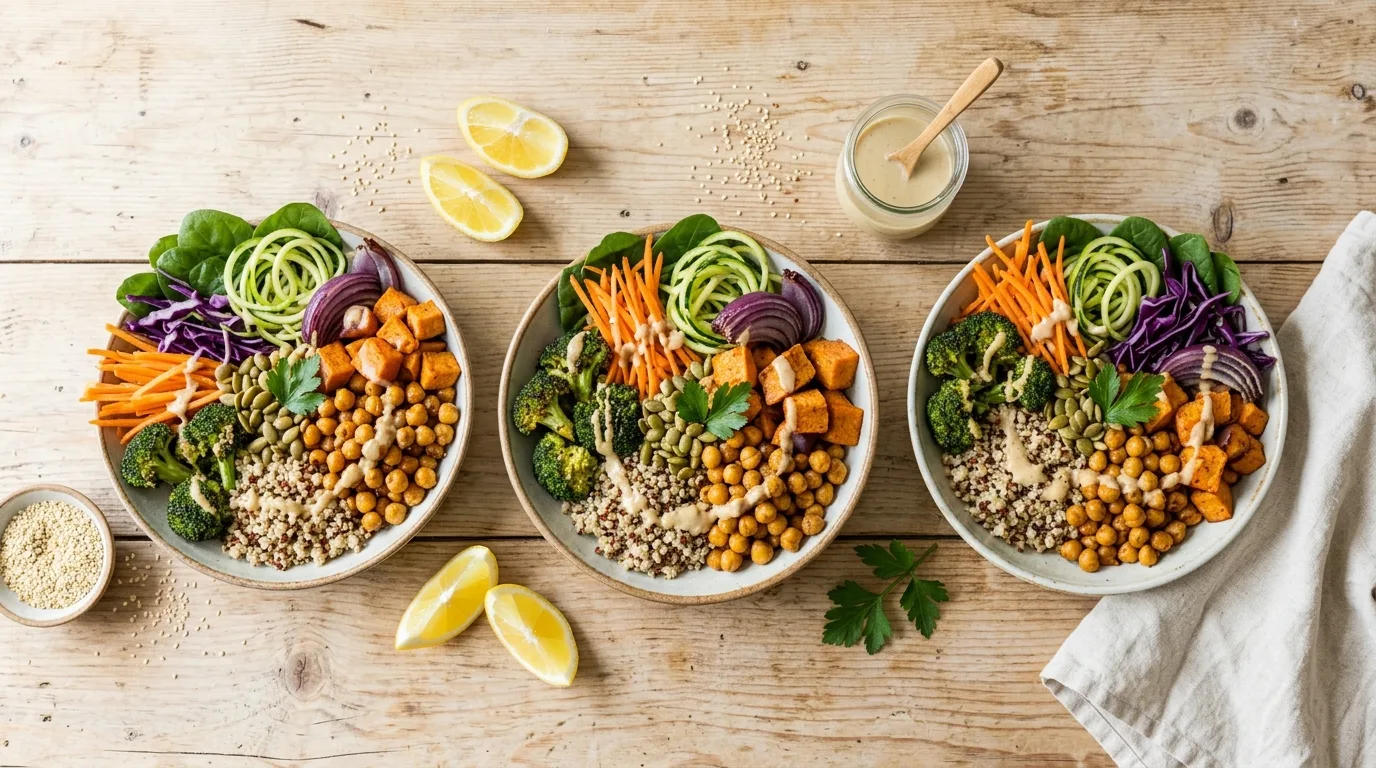
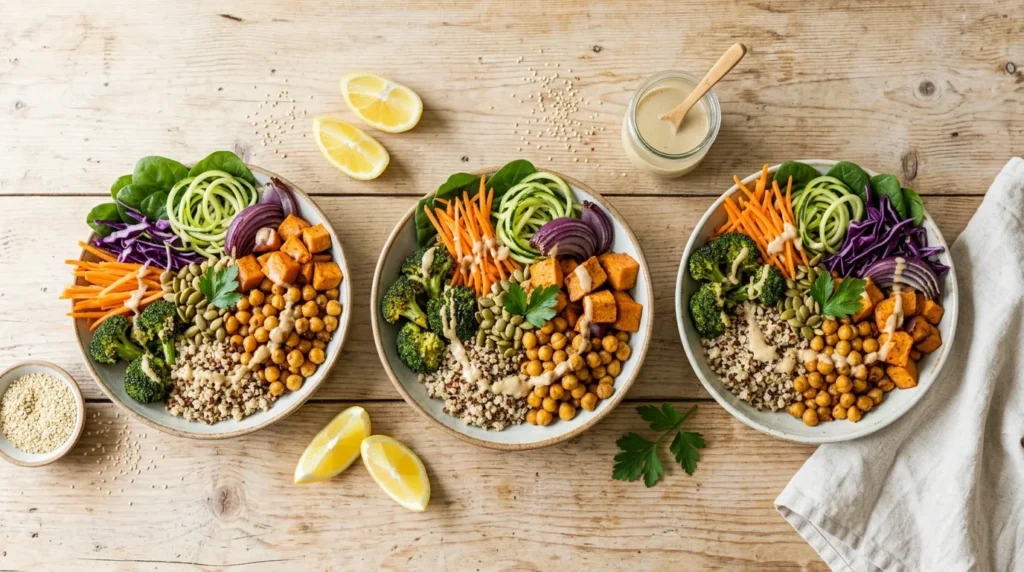
4. Roasted Vegetable and Chickpea Bowls
Chickpeas are affordable, filling, and easy to season.
Drain and rinse canned chickpeas before adding them to a baking sheet. Toss them with olive oil, paprika, garlic powder, and black pepper.
Add chopped broccoli, carrots, zucchini, and red onion. Roast everything until the vegetables become tender and lightly browned.
Serve the mixture over quinoa or brown rice. Add lemon juice before eating for a fresh finish.
This meal works well for lunch or dinner. It also makes a useful meal free option during the week.
5. Simple Egg Breakfast Muffins
Egg muffins can make rushed mornings much easier.
Whisk eggs with chopped spinach, bell peppers, onions, and a small amount of cheese. Pour the mixture into a greased muffin pan.
Bake until the centers are firm. Let them cool before storing them in sealed containers.
You can pair two egg muffins with fruit and whole-grain toast. This creates a simple breakfast without much morning preparation.
Avoid adding too much cheese or processed meat. Vegetables can provide plenty of flavor without making the muffins heavy.
6. Greek Yogurt Snack Cups
Healthy snacks can prevent the afternoon hunger that often leads to random choices.
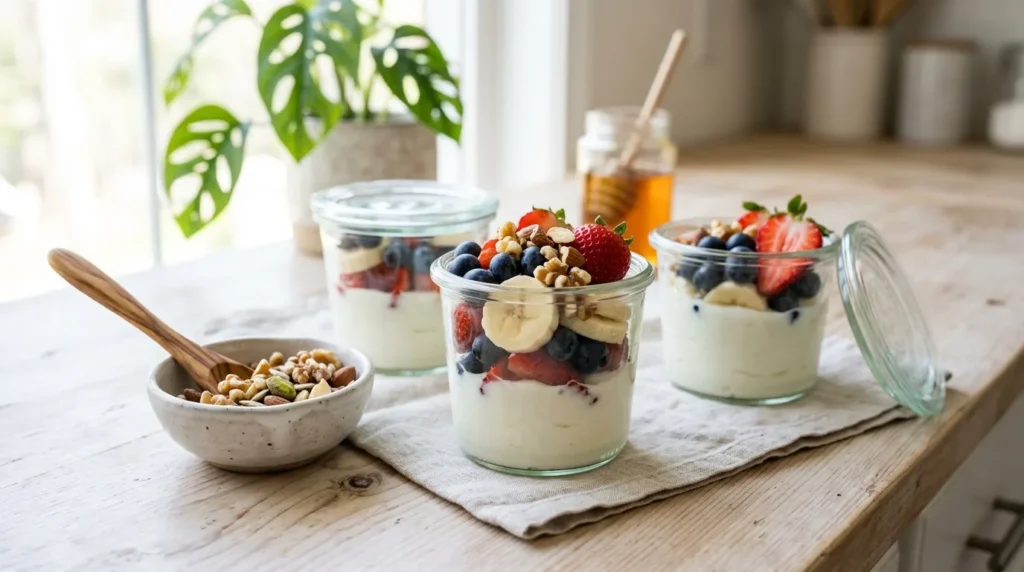
Prepare individual cups with plain Greek yogurt and fresh berries. Add sliced banana, cinnamon, or a small portion of nuts.
Keep crunchy toppings separate until you eat the yogurt. This simple step prevents soggy textures.
You can also prepare yogurt with oats and fruit for a quick mini breakfast.
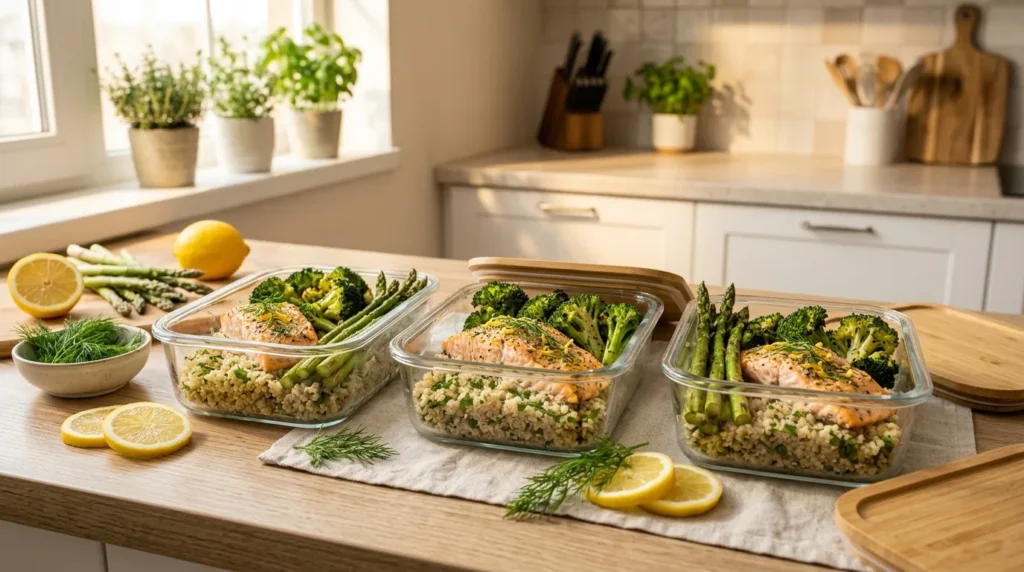
7. Easy Sheet Pan Salmon and Vegetables
Salmon offers another useful protein for your weekly rotation.
Place salmon portions on a sheet pan with broccoli, asparagus, or green beans. Add lemon juice, garlic, black pepper, and a small amount of olive oil.
Roast everything until the salmon reaches a safe internal temperature. Divide the meal with cooked quinoa or roasted potatoes.
Cooked fish should generally stay refrigerated for three to four days.
For longer storage, freeze portions that you will not eat within the recommended refrigerator window.
8. High Fiber Bean and Rice Bowls
Beans and rice create one of the easiest meal prep combinations.
Cook brown rice and prepare black beans with onions, tomatoes, cumin, and paprika. Add corn, bell peppers, and chopped lettuce when serving.
You can turn the same ingredients into bowls, wraps, or salads. Add salsa for moisture instead of a heavy dressing.
This flexibility matters because eating the same meal every day can become tiring.
9. Chicken and Hummus Wraps
Wraps work well when you need lunch that travels easily.
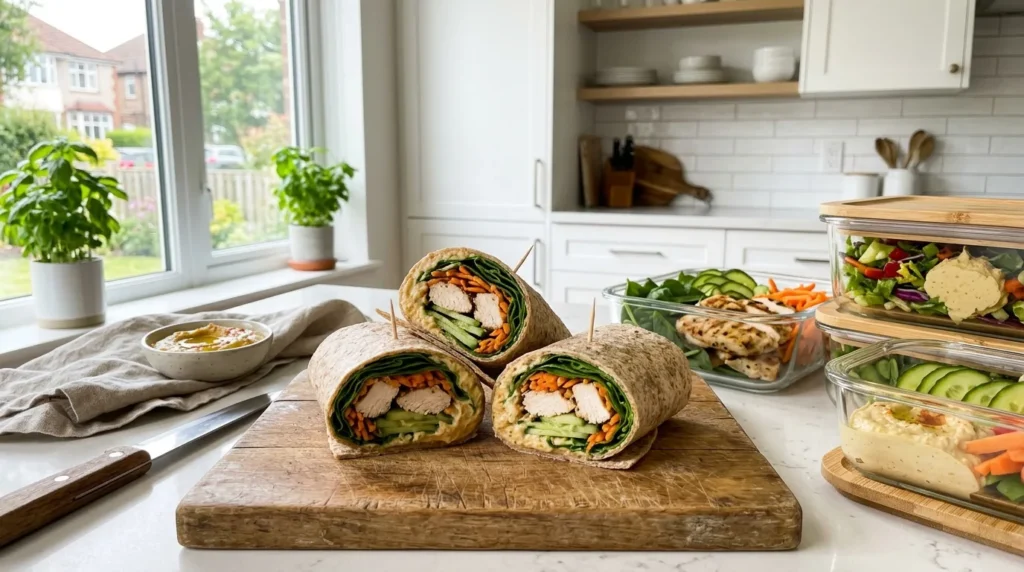
Fill whole-grain tortillas with sliced cooked chicken, hummus, spinach, cucumber, and shredded carrots. Roll them tightly and store them in the refrigerator.
Keep watery ingredients separate if you plan to store wraps for several days. Add cucumber or tomato closer to serving time.
You can also replace chicken with chickpeas or sliced tofu. That makes the meal easier to adjust based on what you have available.
10. Make Ahead Snack Boxes
Snack boxes can stop you from reaching for sweets when hunger hits.
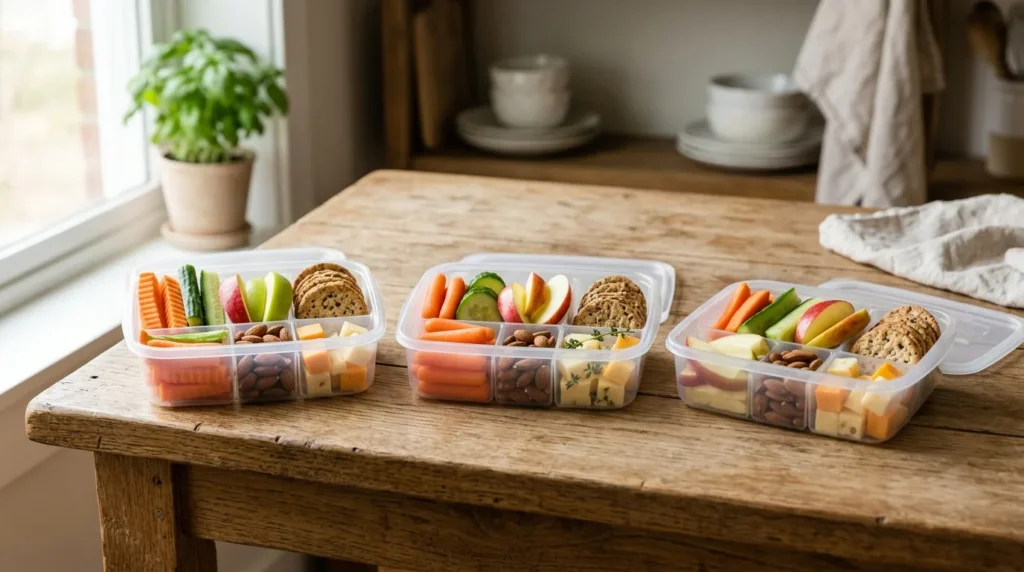
Create small portions of nuts, fresh fruit, carrots, cucumber, whole-grain crackers, and cheese. Store each combination in a separate container.
You do not need expensive snack products. Simple ingredients from your regular grocery trip can work just as well.
Prepare only a few days of fresh snacks at once. This helps maintain texture and freshness.
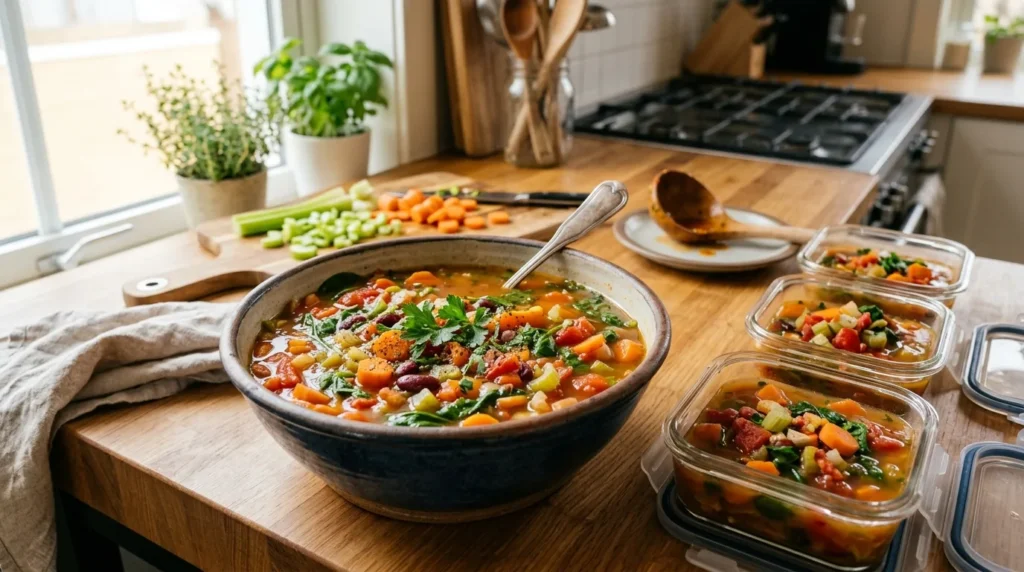
11. Vegetable Soup for Busy Evenings
A large pot of vegetable soup can cover several meals.
Start with onions, carrots, celery, garlic, and tomatoes. Add beans, potatoes, spinach, and your favorite herbs.
Use a low sodium broth when possible. Taste the soup before adding extra salt.
Soup also freezes well. Divide it into individual portions after cooling and store the portions for future busy evenings.
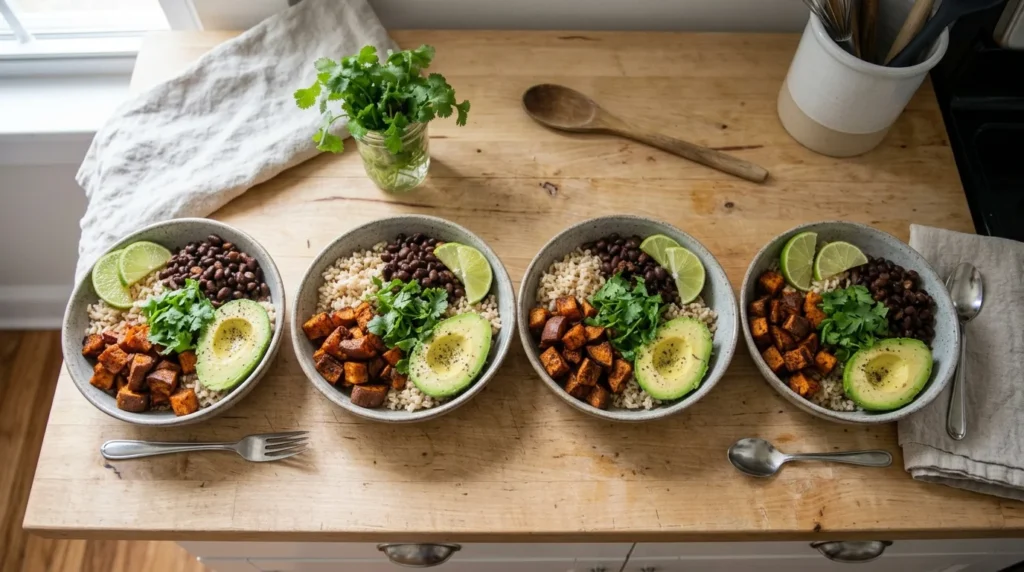
12. Sweet Potato and Black Bean Bowls
Roasted sweet potatoes bring natural sweetness to savory meals.
Cube sweet potatoes and roast them with paprika and black pepper. Prepare black beans separately with onion, garlic, and cumin.
Serve both ingredients over brown rice or quinoa. Add avocado shortly before serving.
For extra freshness, top the bowl with chopped cilantro and lime juice.
This meal feels satisfying without requiring a complicated sauce.
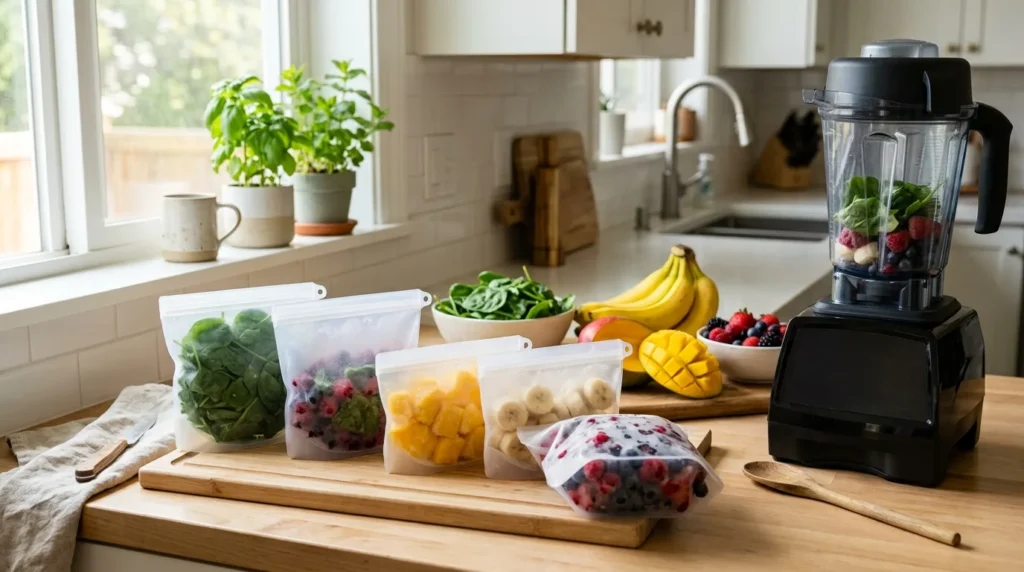
13. Green Smoothie Packs
Smoothie packs can simplify breakfast preparation.
Add spinach, frozen berries, banana slices, and mango to freezer-safe bags or containers. Keep the portions ready for blending.
When you need breakfast, add the frozen ingredients to a blender with milk, fortified soy beverage, or plain yogurt.
Avoid adding large amounts of sweetened juice. Fruit already provides plenty of flavor.
Prepare several combinations so you do not drink the same smoothie every morning.
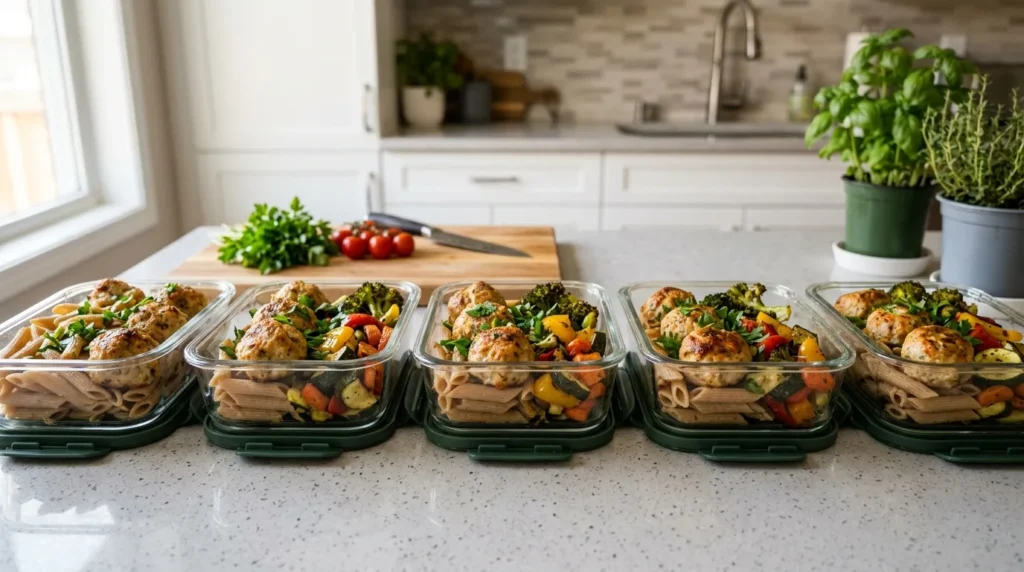
14. Simple Turkey Meatballs
Turkey meatballs can work across several meals.
Mix lean ground turkey with oats, egg, garlic, parsley, and black pepper. Shape the mixture into small meatballs and bake them until fully cooked.
Serve them with whole-grain pasta and vegetables. You can also place them inside whole-grain pita with lettuce and yogurt sauce.
Freeze extra portions if you do not plan to eat them within a few days.
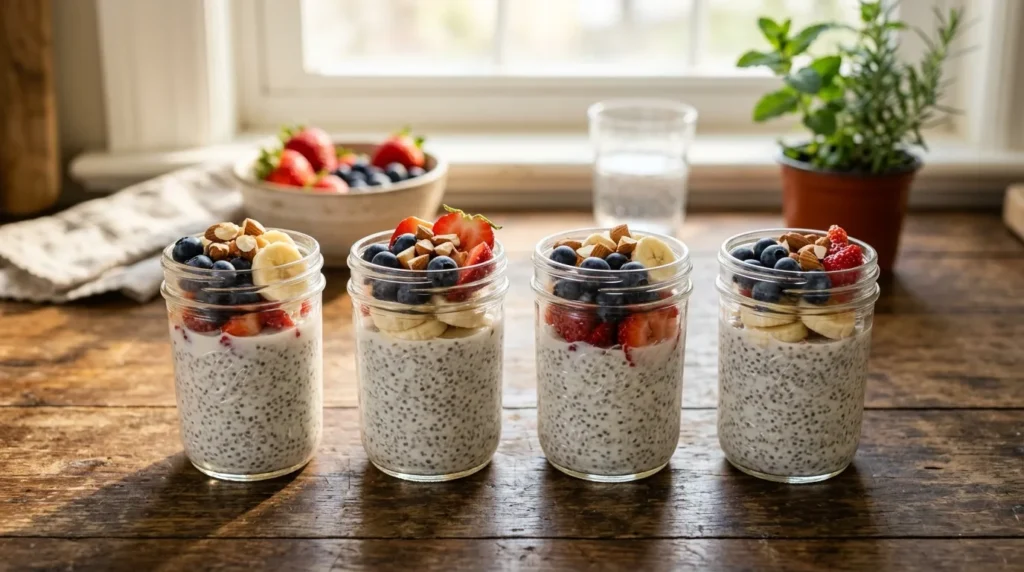
15. Overnight Chia Pudding
Chia pudding provides another quick breakfast option.
Mix chia seeds with milk or an unsweetened fortified soy beverage. Add cinnamon and fruit, then refrigerate overnight.
The mixture thickens as it rests. Add berries, banana, or chopped nuts before eating.
Prepare individual portions so breakfast takes almost no effort. This can be especially useful during busy work mornings.
A Simple Sunday Meal Prep Schedule
You do not need to spend your entire Sunday cooking.
Start by planning three breakfasts, three lunches, and three dinners. Then choose ingredients that can work across multiple meals.
Begin with foods that take the longest to cook. Roast vegetables while rice cooks on the stove.
Prepare your proteins next. While they cook, wash and cut fresh produce.
Finally, assemble your containers. Keep sauces and crunchy toppings separate when needed.
Meal planning guidance also recommends using ingredients across multiple recipes. This approach can help save money and reduce food waste.
A simple prep session might look like this:
- Cook brown rice or quinoa.
- Roast two trays of vegetables.
- Cook chicken or turkey.
- Prepare hard-boiled eggs.
- Wash fresh fruit.
- Make overnight oats.
- Portion snacks.
- Prepare one simple sauce.
This method gives you a useful foundation without requiring dozens of recipes.
How to Keep Meal Prep From Getting Boring
Variety does not always require new ingredients.
Use different seasonings to change the same basic foods. Mexican inspired bowls can use cumin, chili powder, lime, and salsa.
Mediterranean-style meals can use lemon, oregano, cucumber, and hummus. Simple garlic, ginger, and low-sodium soy sauce can create a different flavor direction.
You can also change the format. Turn leftover chicken into a salad one day and a wrap the next.
This strategy saves both cooking time and grocery money.
Healthy Meal Prep Storage Tips
Good storage matters just as much as good preparation.
Place cooked foods into clean containers and refrigerate them promptly refrigerating perishable leftovers within two hours. If the temperature reaches above 90°F, the limit drops to one hour.
Most cooked leftovers should be used within three to four days.
Label containers with the preparation date. Keep older portions toward the front of the refrigerator.
If you cannot eat a portion within the recommended refrigerator period, freeze it instead.
When reheating leftovers, heat them thoroughly recommends reheating leftovers to 165°F throughout.
Always use your best judgment with food quality. When something looks or smells questionable, discard it.
Common Meal Prep Mistakes to Avoid
Preparing Too Much Food
The first mistake is cooking an unrealistic amount of food.
Seven identical lunches might sound efficient. After three days, however, you may want something completely different.
Start with three or four prepared meals instead. You can cook again later if needed.
Using Too Many Ingredients
Another mistake involves creating complicated recipes with long shopping lists.
Meal prep works best when ingredients serve multiple purposes. One batch of roasted vegetables can work in bowls, wraps, salads, and omelets.
Forgetting Texture
Some foods become soft after several days in the refrigerator.
Keep nuts, seeds, croutons, sauces, and fresh toppings separate. Add them immediately before eating.
Ignoring Portion Flexibility
Not everyone needs the same amount of food.
Prepare balanced containers, but adjust portions based on your hunger and personal needs. A meal prep routine should support your lifestyle instead of creating unnecessary restrictions.
A Realistic New Year Meal Prep Formula
If you feel overwhelmed, use this simple formula:
2 proteins + 2 vegetables + 1 grain + 2 breakfasts + 2 snacks
That combination gives you enough variety for several days.
For example, prepare lemon chicken and black beans as your proteins. Roast broccoli and sweet potatoes for vegetables.
Add brown rice as your grain. Prepare overnight oats and egg muffins for breakfast.
Finish with yogurt cups and fruit and nut snack boxes.
You can then mix these ingredients into different combinations throughout the week.
Final Thoughts on Healthy Meal Prep for New Year
A healthier New Year does not require an extreme diet or a complicated kitchen routine. Small preparations can make everyday meals easier.
The best healthy meal prep for New Year routine is one you can repeat after January ends. Focus on simple ingredients, flexible meals, and realistic preparation times.
Prepare enough food to support your week without overwhelming yourself. Keep flavors varied and use ingredients across several meals.
Most importantly, give yourself room to adjust. Some weeks will be organized, while others will become unexpectedly busy.
A flexible meal prep routine can still keep you moving toward your goals.
Ready to make this your easiest food year yet? Start with two proteins, two vegetables, and one grain this weekend. Save this guide, choose your favorite combinations, and build a simple meal prep routine that works for your real life. For more practical recipes and easy meal ideas, keep exploring SnapMealsDaily.