Discover the rich history, secret techniques, and authentic recipes of the world’s most beloved rice dish cooked the way it was always meant to taste.

Table of Contents
- What Makes Biryani So Special?
- Types of Biryani A Regional Overview
- Classic Chicken Biryani Step by Step Recipe
- Mutton Biryani The Royal Version
- Vegetable Biryani for Every Occasion
- Essential Tips & Secrets from Expert Cooks
- Biryani vs. Pulao What’s the Real Difference?

1. What Makes Biryani So Special?
Biryani is not simply a rice dish — it is a culinary tradition passed down through centuries of South Asian, Persian, and Mughal history. At its heart, biryani is a slow-cooked layered dish combining fragrant long-grain Basmati rice, aromatic whole spices, caramelized onions, saffron, and — depending on the version — meat, vegetables, or eggs.
What truly separates biryani from every other rice preparation in the world is the dum method: the dish is sealed and cooked over low heat so that steam circulates within, merging the flavors of rice and protein into something greater than the sum of its parts. The result is a dish with distinct layers, each grain of rice perfectly separate, every bite layered with depth.
Did you know? The word “biryani” is derived from the Persian word biriyan, meaning “fried before cooking.” It was introduced to the Indian subcontinent by Persian traders and later elevated by the Mughal emperors who employed dedicated royal chefs — called rakabdars — solely to perfect this dish.

2. Types of Biryani A Regional Overview
Across Pakistan, India, and the diaspora worldwide, biryani takes on dozens of distinct regional identities. Here are the most iconic styles every food lover should know:
Hyderabadi Biryani
The gold standard. Cooked using the kachchi (raw meat) dum technique. Bold spices, saffron milk, and fried onions define it.Non-Vegetarian
Sindhi Biryani
Pakistan’s crown jewel. Tangy with tomatoes and yogurt, topped with fried potatoes, and a generous hand with green chilies.Non-Vegetarian
Lucknowi (Awadhi)
Subtle, fragrant, and aristocratic. The pakki style — meat and rice cooked separately — makes it delicate and soft.Non-Vegetarian
Vegetable Biryani
Colorful, nutritious, and deeply aromatic. Potatoes, carrots, peas, and paneer make a satisfying meatless feast.Vegetarian
Malabar Fish Biryani
From Kerala’s coast — light coconut undertones, curry leaves, and fried fish folded into short-grain Kaima rice.Non-Vegetarian

3. Classic Chicken Biryani Authentic Recipe
This is the version most home cooks will make dozens of times over a lifetime. Follow these steps carefully and you will produce a biryani that rivals any restaurant in the country.
Ingredients (serves 4–6)
For the chicken
- 1 kg chicken, bone-in pieces
- 1 cup plain yogurt
- 3 medium onions, thinly sliced
- 4 tbsp cooking oil or ghee
- 2 tbsp ginger-garlic paste
- 2 tsp red chili powder
- 1 tsp turmeric
- 1 tsp garam masala
- Salt to taste
- Juice of 1 lemon
- Handful of fresh mint & coriander
For the rice
- 3 cups aged Basmati rice
- 2 bay leaves
- 4 green cardamoms
- 2 black cardamoms
- 1 cinnamon stick
- 6 cloves
- 1 tsp cumin seeds
- Salt (water should taste like sea water)
- 1 tbsp oil
- A pinch of saffron in 3 tbsp warm milk
- Fried onions (birista) for topping

Step by Step Instructions
Marinate the chicken: Combine chicken with yogurt, ginger-garlic paste, chili powder, turmeric, garam masala, lemon juice, salt, and half the mint and coriander. Mix thoroughly. For best results, marinate for at least 2 hours — overnight is ideal.
Make the birista (fried onions): Slice onions paper-thin and fry in oil over medium heat, stirring regularly, until deep golden-brown. Drain on paper towels. These are both a flavoring and a garnish. Do not skip this step.
Cook the masala: In the same pot, add the marinated chicken. Cook on medium-high heat for 15–18 minutes, stirring occasionally, until the oil separates from the masala and the chicken is 80% cooked. Adjust salt.
Parboil the rice: Wash and soak Basmati rice for 30 minutes. Bring a large pot of heavily salted, spiced water to a boil. Add rice and cook until it is exactly 70% done — the grain should still have a slight firmness in the center. Drain immediately.
Layer the biryani: In a heavy-bottomed pot, spread the chicken masala as the bottom layer. Top with half the parboiled rice. Sprinkle mint, coriander, and half the birista. Add the remaining rice, drizzle saffron milk over the top, and finish with the rest of the birista and a tablespoon of ghee.
Dum cooking: Seal the pot tightly — use foil under the lid to prevent steam from escaping. Cook on high heat for 3 minutes, then reduce to the lowest possible flame and cook for 25–30 minutes. This slow steam-cooking is what creates the magic. Allow to rest for 10 minutes before opening.
Serve: Use a wide, flat spoon or spatula to gently mix from the sides, bringing the chicken up through the rice. Serve hot with raita, salad, and a wedge of lemon.

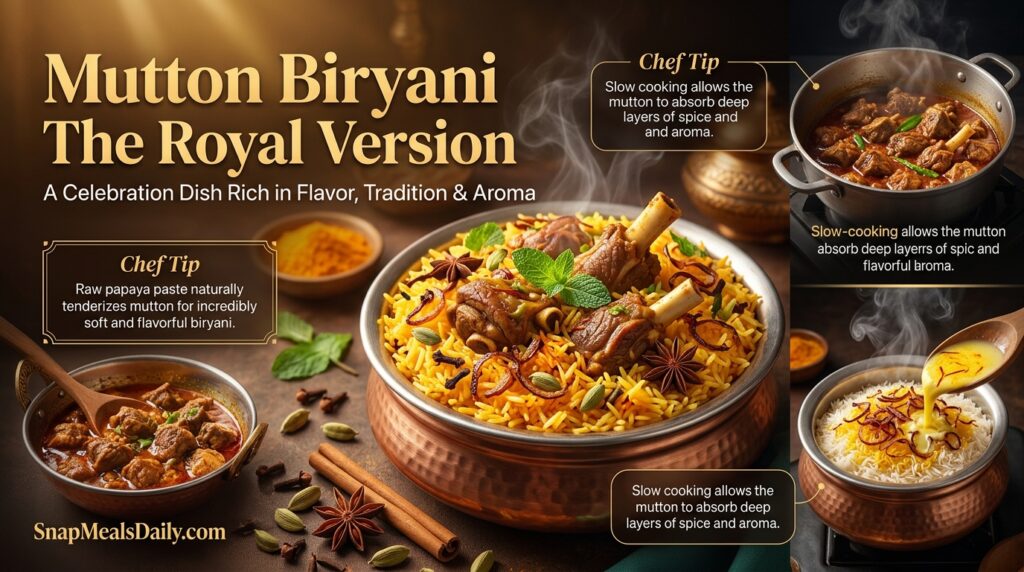
4. Mutton Biryani The Royal Version
If chicken biryani is the everyday favourite, mutton biryani is reserved for celebrations — Eid, weddings, and family gatherings. The deeper, more complex flavor of mutton absorbs spices differently and rewards patience.
The key difference in technique: mutton requires longer cooking in the masala base — typically 40 to 55 minutes on medium-low heat — before layering begins. Add a cup of water during this phase and cook covered until the meat is tender but not falling off the bone. Everything else follows the same layering and dum method as chicken biryani.
Pro Tip: For mutton biryani, add a small piece of raw papaya paste (about 1 tablespoon) to the marinade. The natural enzymes break down the meat fibers, cutting cooking time and making the mutton extraordinarily tender without compromising flavor.
5. Vegetable Biryani Wholesome and Aromatic
Vegetable biryani is often underestimated. When done properly — with whole spices, a rich onion-tomato base, and quality ghee — it is as deeply satisfying as any meat version.
Use a mix of firm vegetables that hold their shape: baby potatoes (halved and lightly fried), green peas, diced carrots, cauliflower florets, and cubed paneer. Fry the paneer separately until golden, then add it at the layering stage rather than cooking it in the masala, to preserve its texture. The dum technique and saffron garnish remain exactly the same.

6. Expert Tips & Secrets for Perfect Biryani
- Always use aged Basmati rice — grains that are at least one year old have lower moisture content and cook up longer, fluffier, and more separate. Fresh Basmati turns mushy easily.
- The birista (fried onions) is not optional decoration. It provides 30% of biryani’s characteristic flavor. Fry in batches, never overcrowd the pan, and stop frying when they are golden-brown — not dark brown or black.
- Your boiling water for rice should taste nearly as salty as the sea. Under-salted rice results in a flat, dull biryani no matter how flavorful your masala is.
- The dum phase requires a tawa (flat griddle) or a heat diffuser under your pot. Direct flame — even on low — creates hotspots that burn the bottom layer. A tawa distributes heat gently and evenly.
- Use fresh mint generously in the layers. Dried mint is not a substitute — it adds bitterness rather than the bright, cooling contrast fresh mint provides.
- Saffron is worth the investment. Crush a generous pinch between your fingers, steep in warm (not hot) milk for 10 minutes, and drizzle over the top layer. It gives color, aroma, and a subtle honeyed flavor that makes the dish look as stunning as it tastes.

7. Biryani vs. Pulao What’s the Real Difference?
This is one of the most debated food questions in South Asia. Both are rice dishes. Both use spices. But they are fundamentally different in technique and outcome.
| Feature | Biryani | Pulao |
|---|---|---|
| Cooking Method | Layered, then dum-cooked | One-pot, absorption method |
| Rice & Protein | Cooked separately, then combined | Cooked together from the start |
| Flavor Intensity | Bold, complex, deeply spiced | Subtle, delicate, clean |
| Time Required | 2–4 hours (with marination) | 30–60 minutes |
| Occasion | Celebrations, special meals | Everyday cooking |
| Saffron Used? | Yes, almost always | Rarely |
Put simply: pulao is where rice and protein cook together and absorb each other’s flavor. Biryani is where each component is perfected separately before being united through dum. That distinction in technique is what produces biryani’s signature layered complexity.

Biryani is More Than a Recipe It’s a Ritual
Whether you are cooking it for the first time or the hundredth, biryani rewards care, patience, and good ingredients. Master the dum technique, never rush the birista, and always season your rice water generously. Follow these principles and every pot of biryani you make will be something worth gathering around the table for.